
ShellBean
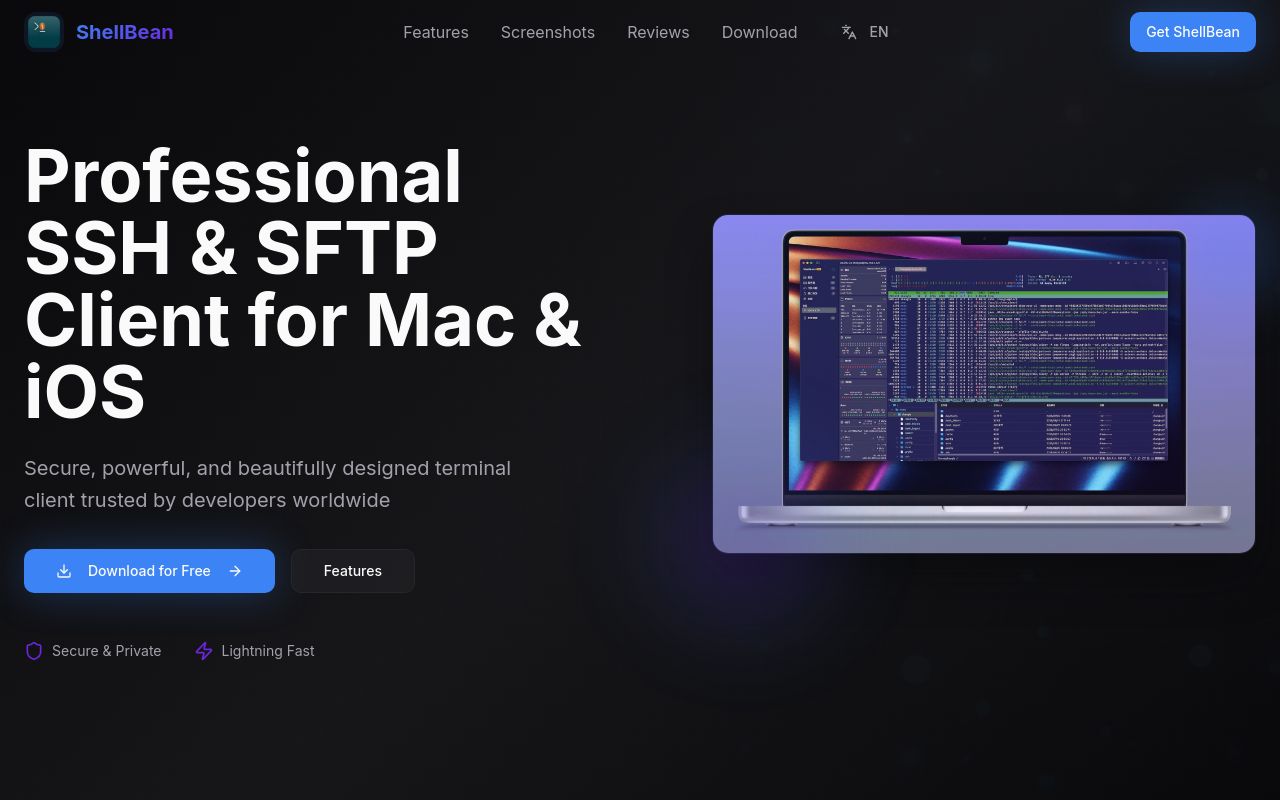
ShellBean is a platform that simplifies the creation and deployment of web applications by automating infrastructure management and development workflows.
替代服务
技术栈
ShellBean: Simplify Web Application Deployment
ShellBean is designed to streamline the development and deployment process for web applications. It focuses on automating the tedious aspects of infrastructure management and development workflows, enabling developers to focus on writing code and building features.
Key Features and Characteristics:
- Automated Infrastructure Provisioning: ShellBean automates the creation and configuration of the underlying infrastructure required to run web applications. This eliminates manual configuration and reduces the risk of errors.
- Simplified Deployment Workflows: The platform provides a simplified and streamlined deployment process, allowing developers to deploy applications quickly and easily. It supports various deployment strategies.
- Containerization Support: ShellBean likely leverages containerization technologies like Docker to package and deploy applications in isolated environments, ensuring consistency and portability across different environments.
- Scalability: The platform is built with scalability in mind, allowing applications to handle increasing traffic and user loads without requiring significant manual intervention. It likely integrates with auto-scaling capabilities provided by cloud providers.
- Monitoring and Logging: ShellBean likely provides built-in monitoring and logging capabilities, allowing developers to track application performance and identify potential issues.
- Collaboration Features: The platform may include features that facilitate collaboration among developers, such as shared environments and access controls.
Target Users and Use Cases:
- Web Developers: Developers who want to deploy their applications quickly and easily without having to worry about infrastructure management.
- Startups and Small Businesses: Companies with limited resources who need a cost-effective way to deploy and manage their web applications.
- DevOps Teams: Teams responsible for managing the infrastructure and deployment pipeline for web applications.
Core Advantages:
- Increased Productivity: Automate infrastructure management and deployment, freeing up developers to focus on writing code.
- Reduced Costs: Eliminates the need for specialized infrastructure expertise and reduces the risk of errors.
- Improved Reliability: Consistent and repeatable deployments ensure that applications are deployed correctly every time.
- Faster Time to Market: Deploy applications quickly and easily, allowing you to get your products to market faster.
- Scalability: Easily scale applications to handle increasing traffic and user loads.
Installation/Deployment:
While the specific installation/deployment process depends on the platform's implementation, it generally involves:
- Account Creation: Sign up for a ShellBean account on their website.
- CLI Tool (Likely): Installing a command-line interface (CLI) tool to interact with the platform.
- Project Configuration: Configuring your project to integrate with ShellBean.
- Deployment: Using the CLI or web interface to deploy your application.
Refer to the official ShellBean documentation for detailed instructions.
Technical Requirements:
- Containerization Knowledge (Recommended): Basic understanding of Docker and containerization concepts is helpful. Though, ShellBean aims to abstract much of it away.
- Cloud Provider Account (Likely): A cloud provider account (e.g., AWS, Azure, Google Cloud) might be required to deploy applications.
- Git Repository: ShellBean will likely interact with a Git repository (e.g., GitHub, GitLab, Bitbucket) to manage source code.
Notable Features:
- Integration with CI/CD pipelines: ShellBean probably offers integrations with popular CI/CD tools (e.g., Jenkins, Travis CI, CircleCI) to automate the entire software delivery process.
- Environment Management: Support for creating and managing different environments (e.g., development, staging, production). This is essential for testing and ensuring code quality before releasing to production.
- Rollback Capabilities: The ability to easily roll back to previous versions of your application in case of issues.
Disclaimer: Since I am unable to directly access the ShellBean website, this description is based on my knowledge of similar services and common features in the web application deployment space. Always refer to the official ShellBean documentation for the most accurate and up-to-date information.
发现更多

Codex
OpenAI 推出的编程开发工具。
Cursor
Cursor 是一个基于 Visual Studio Code 的专有 AI 辅助集成开发环境,通过深度理解项目上下文,实现智能代码生成、重构、调试与文档化,显著提升开发效率和代码质量。

HexHub
HexHub 为程序员和运维人员量身打造的一站式开发运维利器
ShipAny
ShipAny is an AI-powered shipping platform that optimizes logistics, reduces costs, and provides real-time visibility for businesses of all sizes.

Claude Code
Claude Code 是由 Anthropic 公司开发的一款人工智能编码助手,它以在命令行终端(CLI)中运行的“代理”(Agent)形式工作,旨在帮助开发者通过自然语言指令完成复杂的编程任务。
La Terminal
La Terminal is a highly configurable terminal emulator and SSH client for modern workflows, offering a powerful and customizable command-line experience.