
OpenScreen
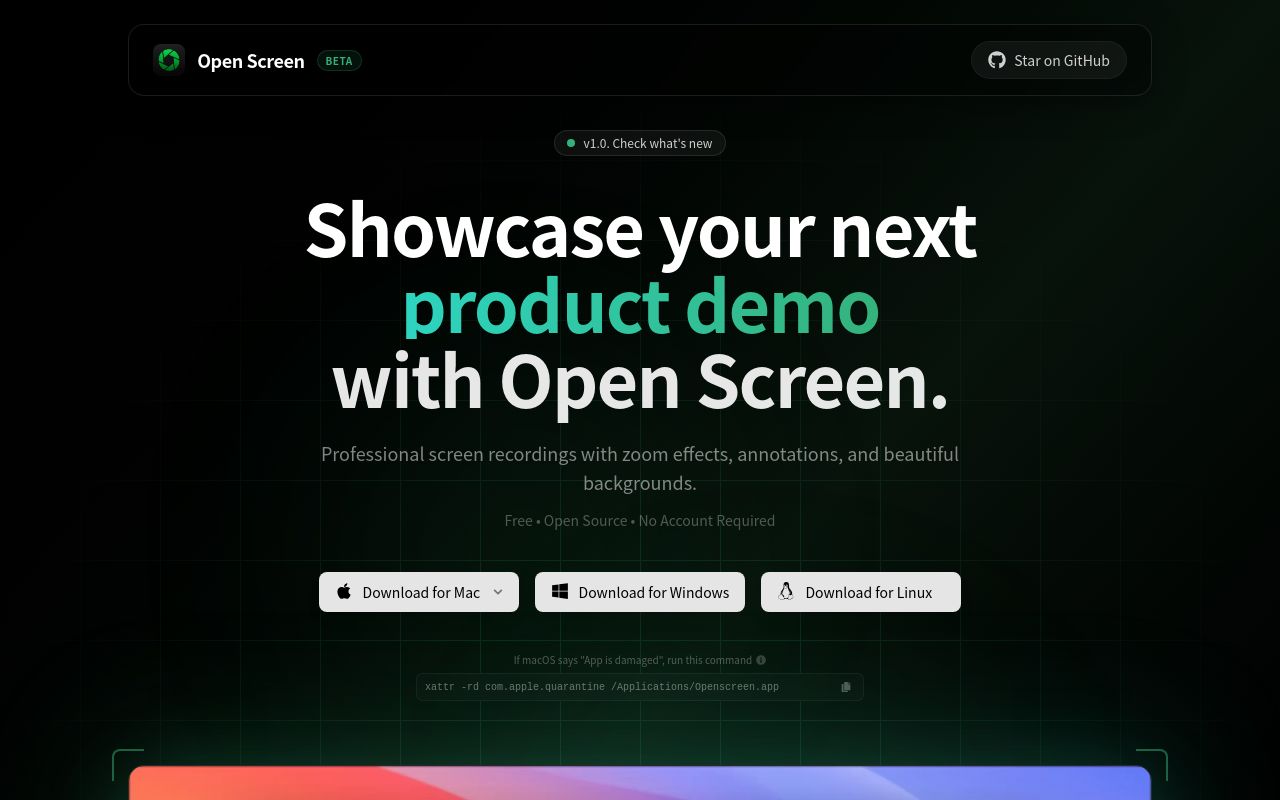
OpenScreen is an open-source screen mirroring and remote control solution allowing users to display and interact with one device's screen on another.
Alternatives
Tech stack
No tech stack added yet. Sign in to suggest some
OpenScreen: Open-Source Screen Mirroring and Remote Control
OpenScreen is a versatile open-source tool designed for screen mirroring and remote control functionalities. It enables users to seamlessly display and interact with one device's screen on another, promoting collaboration and remote assistance.
Key Features and Characteristics:
- Screen Mirroring: Real-time display of one device's screen on another.
- Remote Control: Allows controlling the mirrored device from the viewing device.
- Cross-Platform Compatibility: Works across various operating systems and devices (e.g., Windows, macOS, Linux, Android, iOS, Web).
- Open-Source: Freely available and modifiable under the MIT License, encouraging community contributions and customization.
- WebRTC Technology: Utilizes WebRTC for efficient and secure peer-to-peer communication, minimizing latency.
- Simple Setup: Easy to install and configure with minimal technical expertise required.
- Secure Connection: Employs encryption to protect sensitive data during screen mirroring and remote control sessions.
Target Users and Use Cases:
- Remote Support: Providing technical assistance to remote users by viewing and controlling their screens.
- Presentations and Demonstrations: Sharing screen content during presentations, demos, and collaborative sessions.
- Education and Training: Facilitating remote learning and training by displaying instructor's screen to students.
- Gaming and Entertainment: Mirroring mobile games or media content onto larger screens for enhanced viewing experience.
- Personal Use: Accessing and controlling personal devices remotely.
Core Advantages:
- Cost-Effective: Eliminates the need for proprietary screen mirroring solutions and expensive remote access software.
- Customizable: Open-source nature allows users to customize the application to suit their specific needs.
- Secure: WebRTC encryption ensures secure communication during screen mirroring and remote control sessions.
- Easy to Use: Simple and intuitive user interface makes it easy for users of all technical skill levels to use.
- Cross-Platform: Works across various devices and operating systems, promoting flexibility and accessibility.
Installation/Deployment (General Guidance):
As an open-source project, installation may involve cloning the repository, installing dependencies (e.g., Node.js, npm/yarn), and building the application. Refer to the project's documentation (README file on GitHub or the official website) for detailed instructions. Deployment options may include hosting the application on a web server or packaging it as a standalone application for different platforms.
Technical Requirements:
- Web browser with WebRTC support.
- Node.js and npm/yarn for development (if building from source).
- Network connectivity for screen mirroring and remote control sessions.
Noteworthy Features:
- Potential for integration with other applications and services through APIs.
- Actively maintained and improved by the open-source community.
- Focus on simplicity and ease of use.
Discover more
BiliNote
BiliNote is an open-source AI video note generator that helps users quickly turn videos from platforms such as Bilibili, YouTube, and Douyin into structured Markdown notes.
Claude Code Usage Monitor
A tool to track and monitor code generation usage of Claude, providing insights into performance, efficiency, and cost.
OneFolderApp
OneFolderApp is an open-source image management tool.
Orca
[Orca](https://www.onorca.dev/) is a desktop Agent Development Environment (ADE) built for the AI era. It is developed by Lovecast Inc., a San Francisco startup backed by Y Combinator, and released as open source under the MIT license. Orca's core idea is to shift the design center of the traditional IDE from "a single human developer" to "a human plus a fleet of AI agents." Users can run more than 25 AI coding agents at the same time, including [[Claude Code]], [[Codex]], Gemini, GitHub Copilot and OpenCode. Each task gets its own isolated [[Git Worktree]], which makes truly parallel development possible. Orca itself does not provide any AI models; users bring their own subscriptions (Bring Your Own Subscription) to connect the AI services they already use.
Playwright
Playwright is an open-source browser automation framework developed by Microsoft, used mainly for web testing, web scraping, and automation. It supports major browser engines such as Chromium, Firefox, and WebKit, runs cross-platform (Windows, Linux, macOS), and offers bindings for multiple languages, including Python, JavaScript, Java, and C#.
Puppeteer
Puppeteer is a Node.js library developed by the Google Chrome team that controls headless Chrome or Chromium browsers through the DevTools protocol.